
Smart Glass Products
Make ordinary glass extraordinary

Smart Glass
Smart Film
Smart Glass Doors
Dyed Black Film and Glass
Smart Glass Spaces
Buy Samples
Online Calculator
Smart Glass Applications
Discover how smart glass is being used to for privacy, security and smart design.

Smart Glass Information
We love sharing our industry knowledge, ideas and design tips!

Blog
FAQs
Warranty
Projects
Installation Guide
PRICE
Partner with Us


How Much Electricity Does Smart Glass Cost to Run?
Smart glass uses about as much power as an LED bulb per 10 square feet. Discover estimated monthly running costs, what happens during a power outage, and how transformers, timers, and controls help you manage electricity use in your home or workplace.
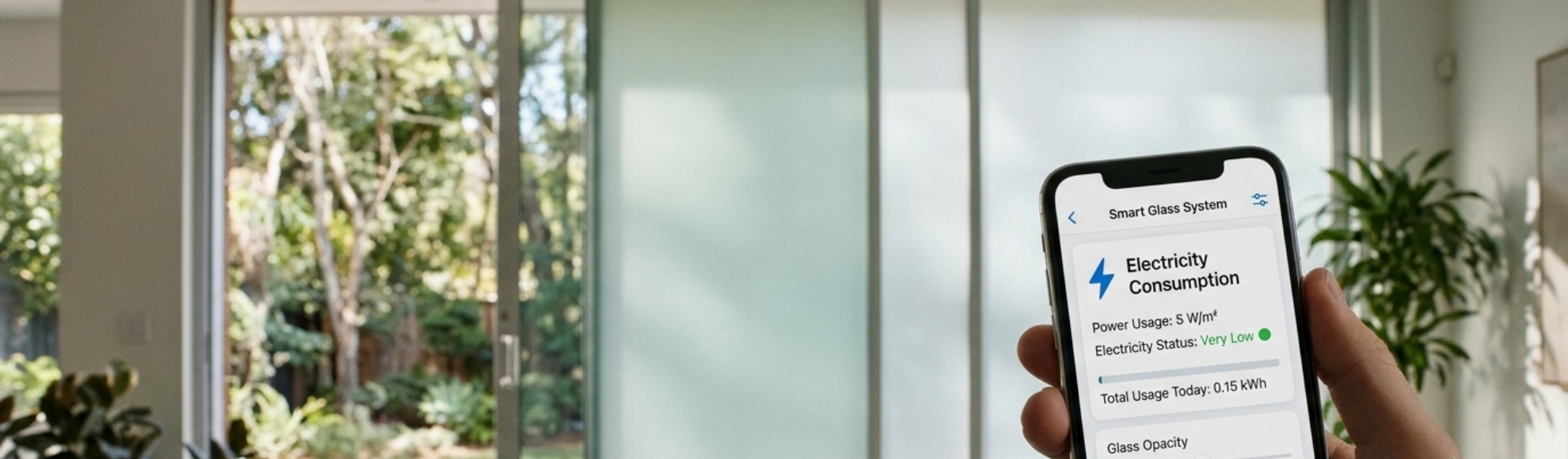
Smart glass uses approximately 5 watts per 10 square feet while switched on and clear—about the same power as a 5-watt LED bulb. A 100-square-foot installation therefore draws approximately 50 watts.
Keep that installation clear for 10 hours a day, and the electricity costs approximately $2.10–$4.20 per month, assuming rates of $0.14–$0.28 per kilowatt-hour.
Whether you’re planning a conference room, a bathroom, or a larger commercial installation, the running cost is straightforward to estimate. Here’s how smart glass uses electricity, what affects your bill, and how to manage its daily operation.
How Does Smart Glass Use Electricity?
Standard switchable privacy glass uses Polymer Dispersed Liquid Crystal (PDLC) technology. A thin layer of liquid crystals changes how light passes through the glass.
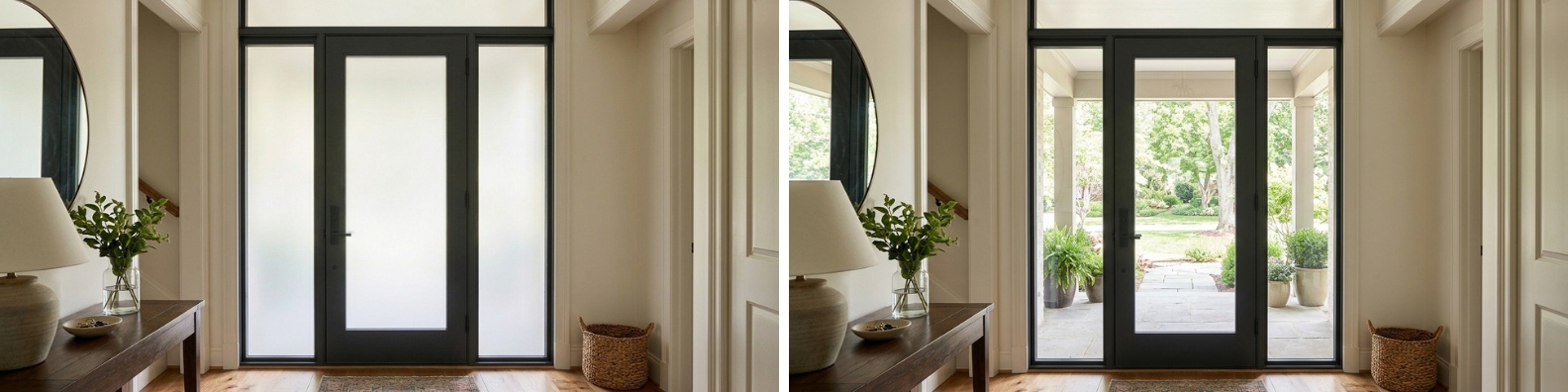
- Power ON: Clear. Electricity aligns the liquid crystals, allowing you to see through the glass.
- Power OFF: Frosted. The crystals scatter light, providing privacy while still allowing daylight through.
The same principle applies to both smart glass, which has the switchable layer built into the glass, and smart film, which is applied to existing glass.
Standard PDLC requires power to remain clear. When switched off, the liquid crystal layer uses no electricity, although a connected transformer or controller may still consume some power.
Watch how smart glass and smart film are powered:
What Happens During a Power Outage?
Standard PDLC smart glass automatically turns frosted when power is lost. This is the same privacy state you get when switching it off.
The glass remains frosted until power returns and the system is switched on again. No manual action is needed to make it frost.
Reverse-mode products behave differently: they are clear without power and become frosted when powered.
See what happens when we cut the power:
How Much Power Does Smart Glass Use?
At approximately 5 watts per 10 square feet, the power requirement increases with the area of glass.
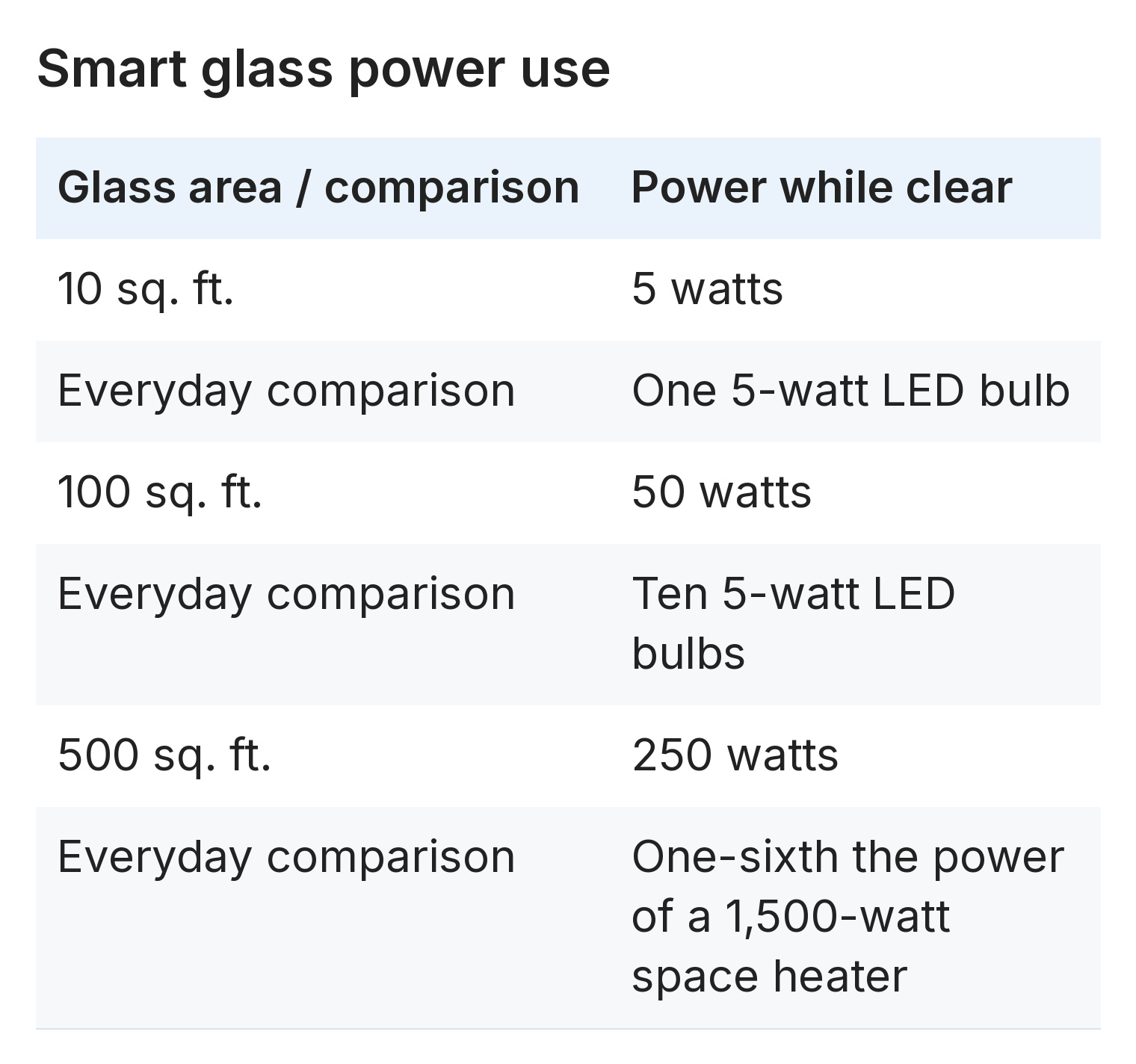
These figures estimate consumption by the glass or film itself. The transformer and control equipment can add to the total power drawn from the outlet.

Watts vs. Kilowatt-Hours: What’s the Difference?
Watts describe how much power a device draws while operating, just like the wattage printed on a light bulb.
Kilowatt-hours (kWh) measure the energy used over time. This is the unit used on your electricity bill.
For example, a 100-square-foot installation drawing 50 watts uses:
- 0.05 kWh in one hour.
- 0.5 kWh in 10 hours.
- 15 kWh over 30 days, when operated for 10 hours each day.
What Does Smart Glass Cost Per Month?
Let’s use a 100-square-foot installation kept clear for 10 hours every day.

Example Electricity Costs
The following rates are illustrative assumptions for the named cities, rather than verified current utility averages. Your actual rate depends on your provider and electricity plan.
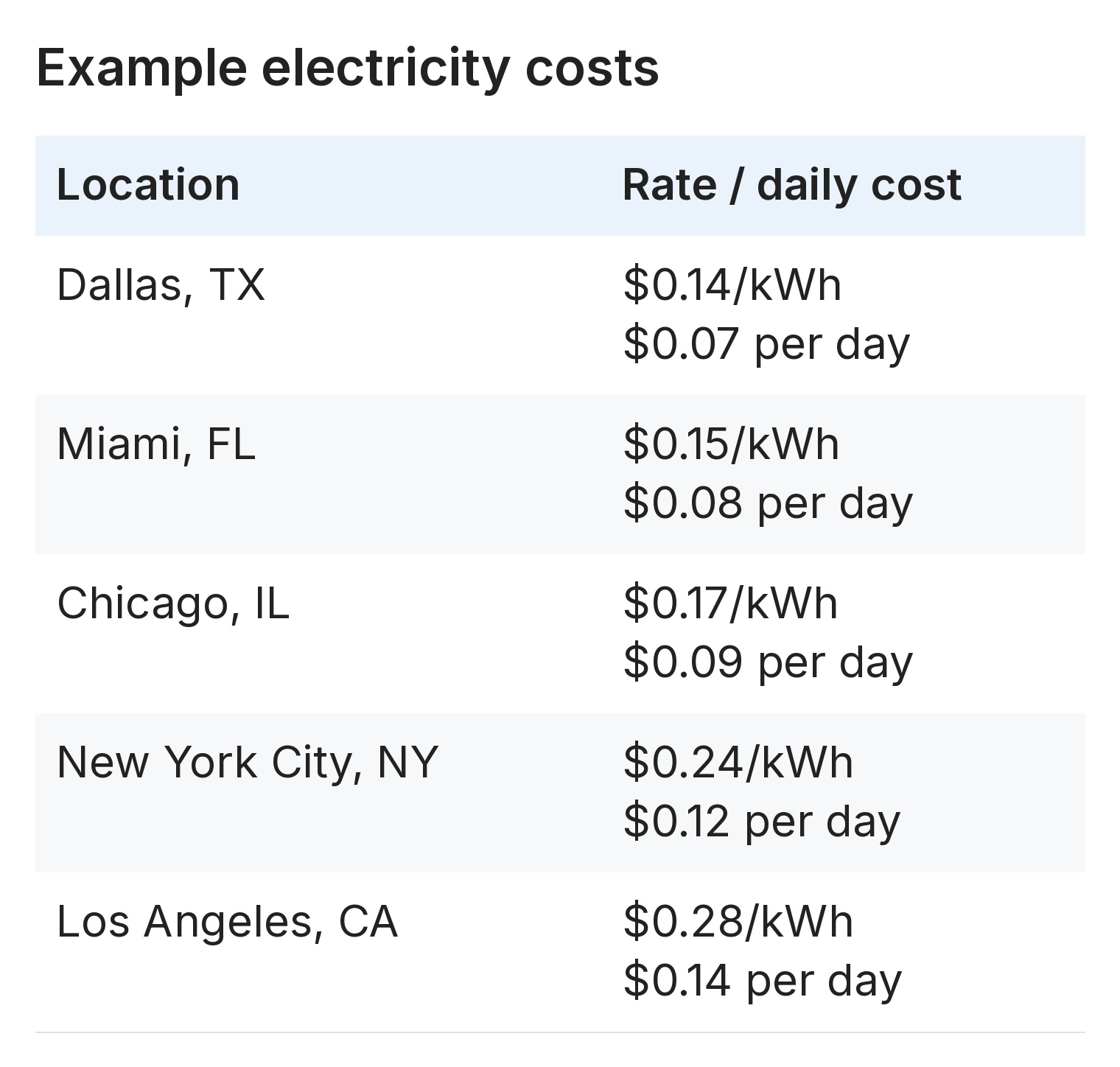
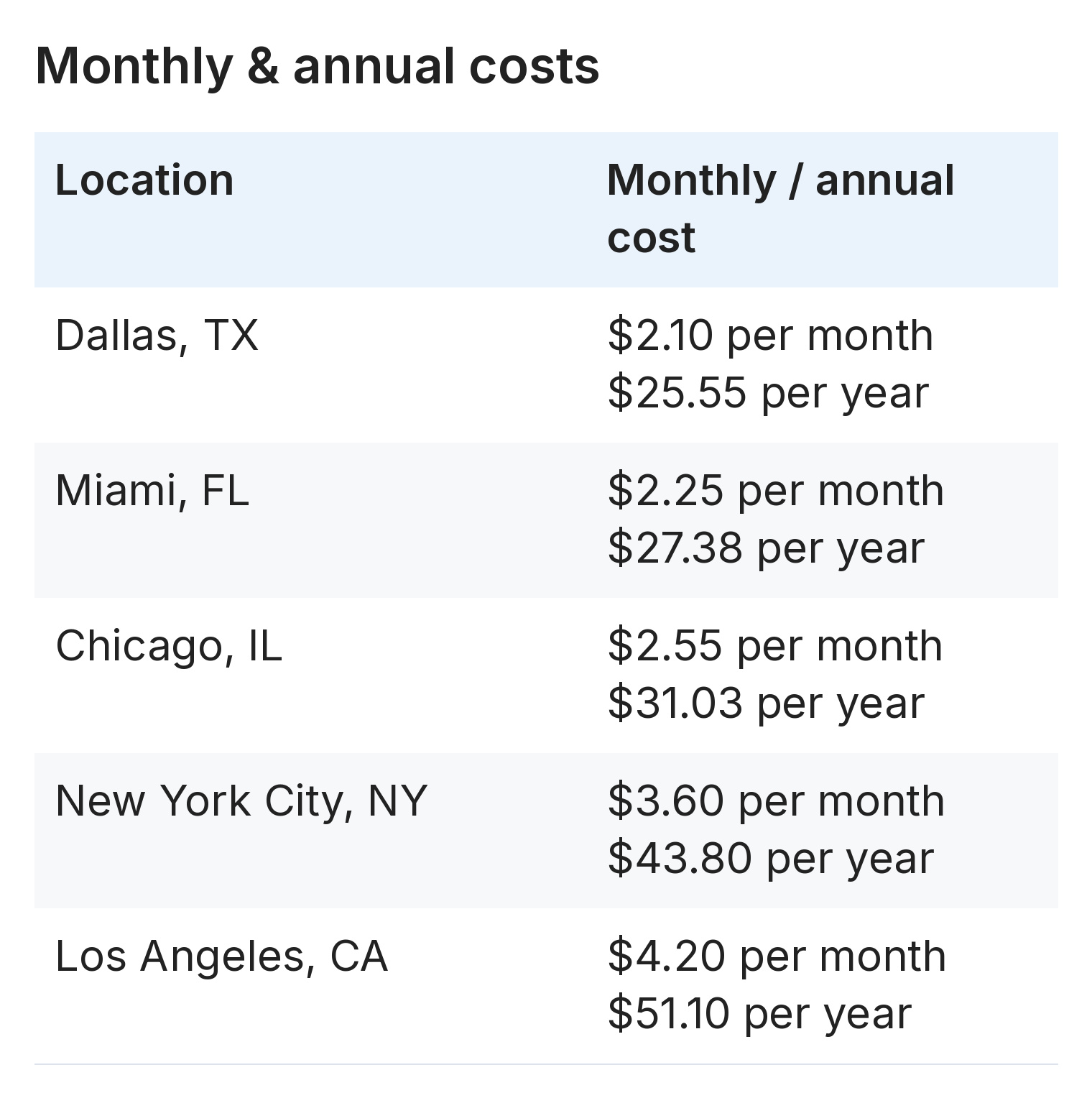
¹ Based on 30 days. ² Based on 365 days. Daily costs are rounded to the nearest cent. Estimates exclude transformer and controller consumption and any additional utility charges.
Calculate the Cost for Your Installation
Use this formula:
Monthly cost = watts ÷ 1,000 × hours used per day × days used × electricity rate
For a 50-watt installation used 10 hours a day at $0.20 per kWh:
50 ÷ 1,000 × 10 × 30 × $0.20 = $3.00 per month
If you only need the glass clear during working hours, calculate the cost using your actual number of operating days.
Watch our overview of smart glass energy efficiency:
Do Different Smart Glass Technologies Use Power Differently?
“Smart glass” describes several technologies. Their electrical behavior depends on how they control privacy or tint.
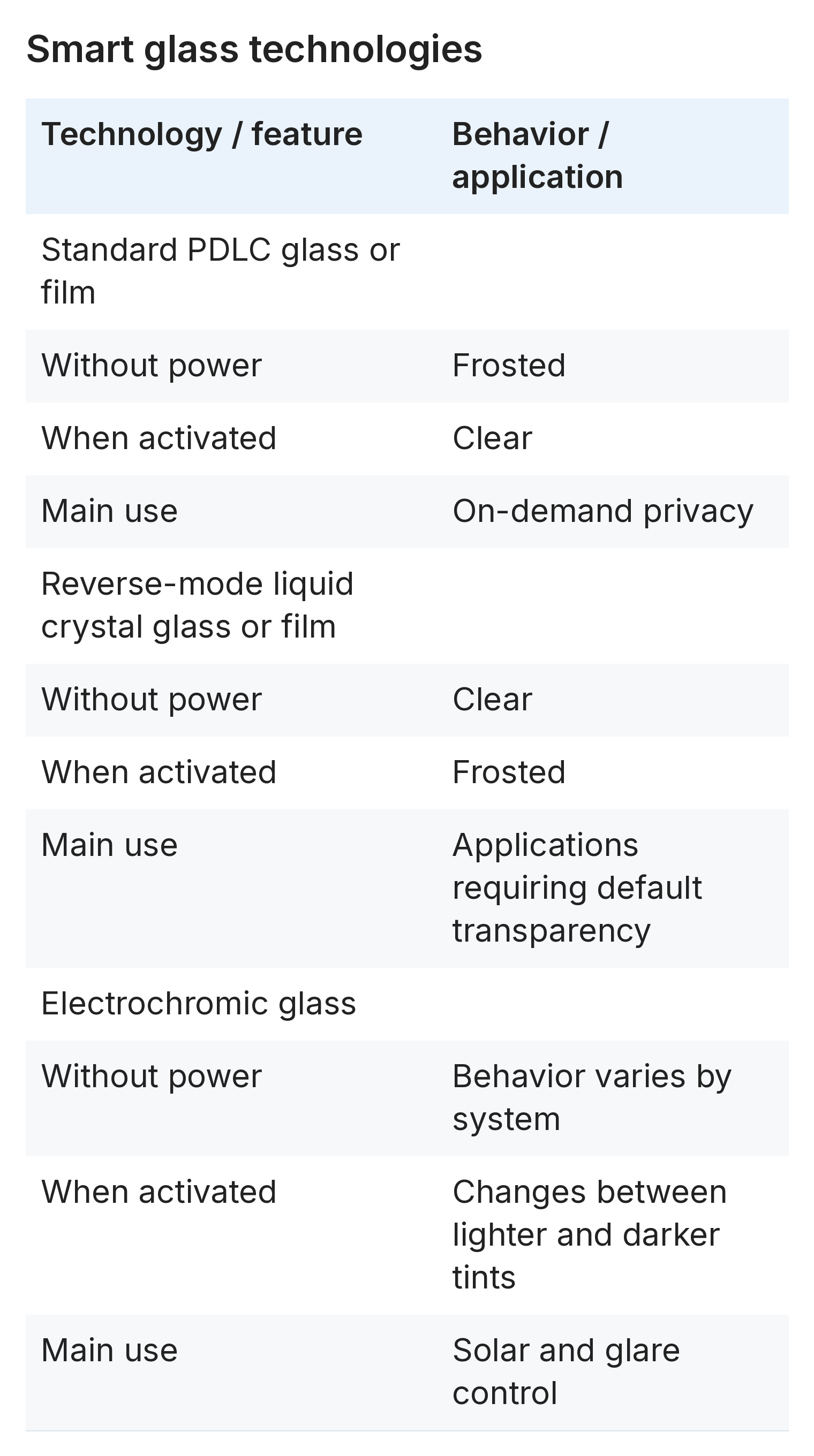
Standard PDLC needs continuous power while clear. Reverse-mode liquid crystal products need power while frosted. Electrochromic switching and holding requirements depend on the system.
When comparing products, ask for the power consumption of the exact model in the operating state you expect to use most often.
Can Smart Glass Help Reduce Heating and Cooling Costs?
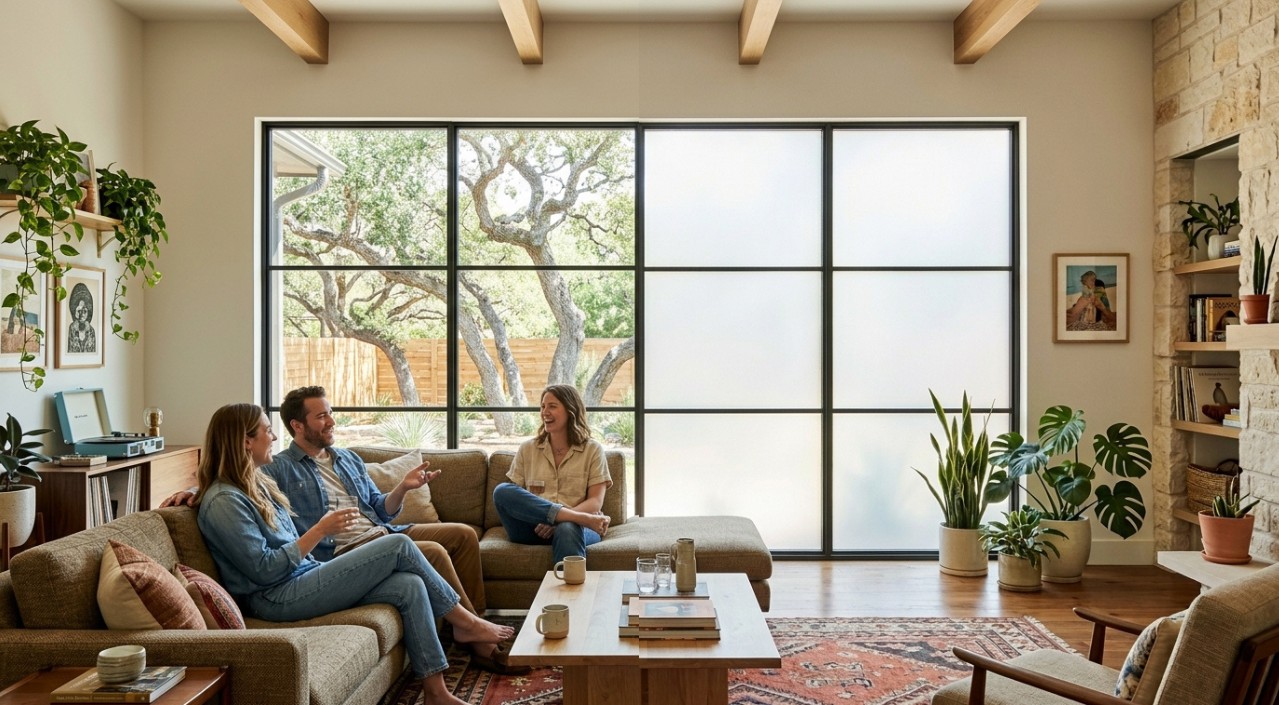
Exterior smart glazing can contribute to energy efficiency, but the savings depend on the complete window system and the building.
An interior meeting-room partition provides privacy and shares daylight between spaces. An exterior window also affects how much solar heat enters and how readily heat moves through the building envelope.
Infrared Blocking, UV Protection, and Daylight
Smart Glass Country’s published Ultra Clear smart film specifications include:
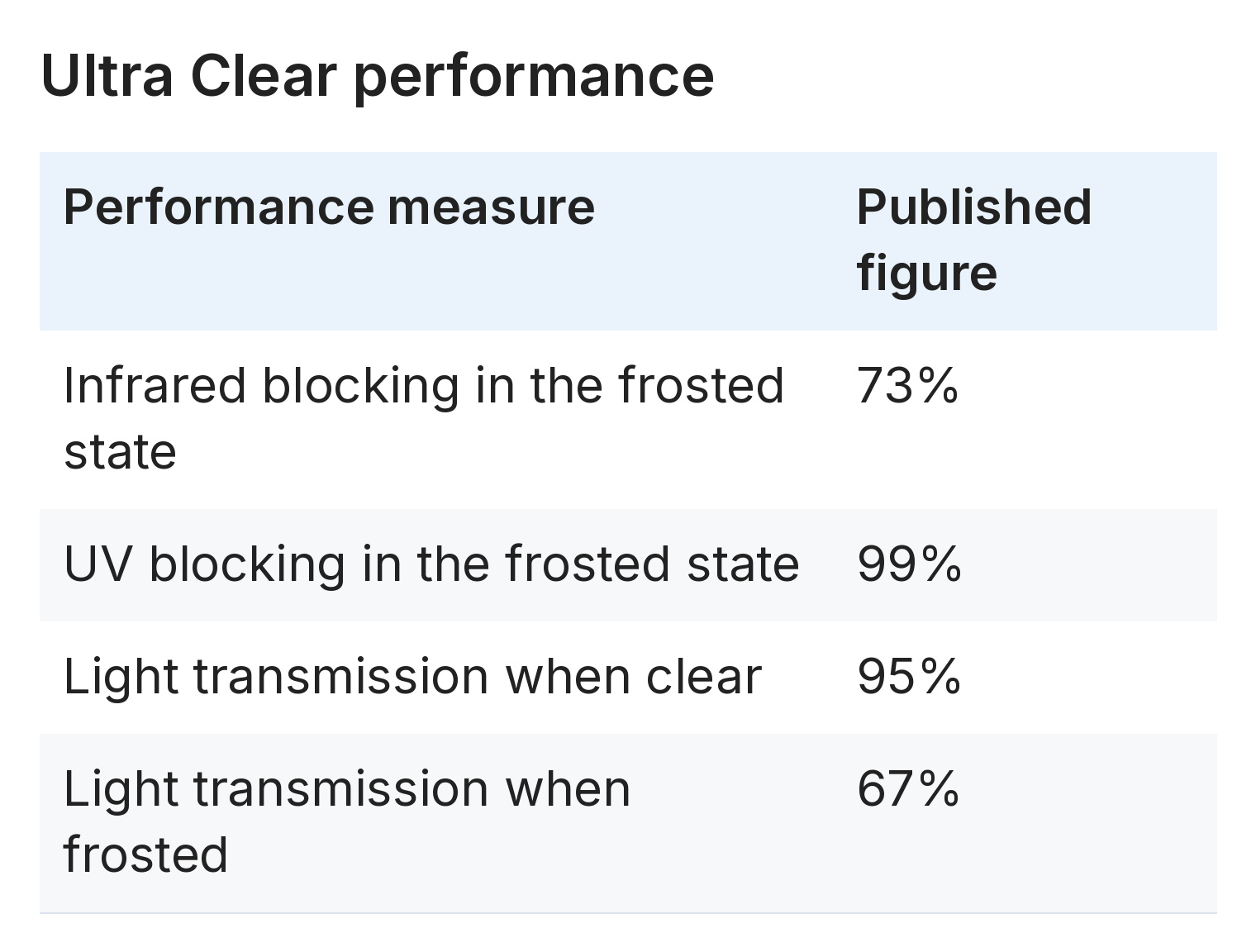
These figures apply to the specified product; results vary with the film and glass configuration.
Infrared blocking can contribute to solar control. UV protection helps reduce one cause of fading in furniture, flooring, and artwork. Light transmission allows daylight to pass through, including when the film is frosted.
However, 73% infrared blocking does not mean a 73% reduction in cooling costs. Actual savings depend on factors such as sunlight exposure, climate, glazing construction, and HVAC operation.
Which Ratings Matter for Exterior Smart Glass?
For exterior applications, review the performance of the complete glazing assembly.
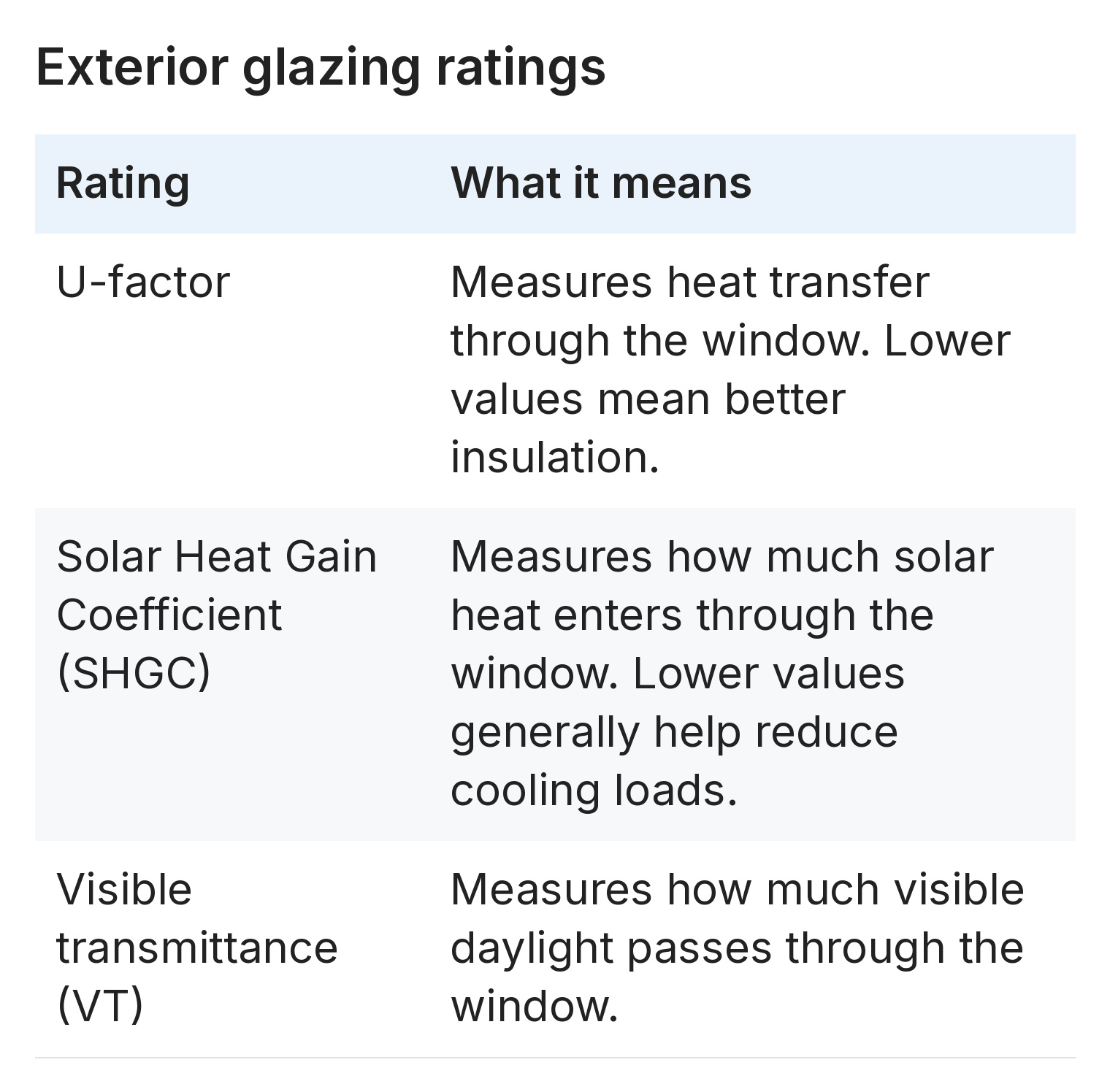
Double or triple glazing, Low-E coatings, gas fills, and frame design all affect these ratings. For projects with specific energy targets, request tested performance data for the proposed assembly.
Retrofitting existing windows? Read our guide to smart film compatibility with double-pane, Low-E, and tempered glass before choosing your product.
What Electrical Equipment Does Smart Glass Need?
Smart glass and smart film require a compatible power supply that converts building electricity to the operating voltage specified for the product.
Smart Glass Country’s published film specification sheet lists:
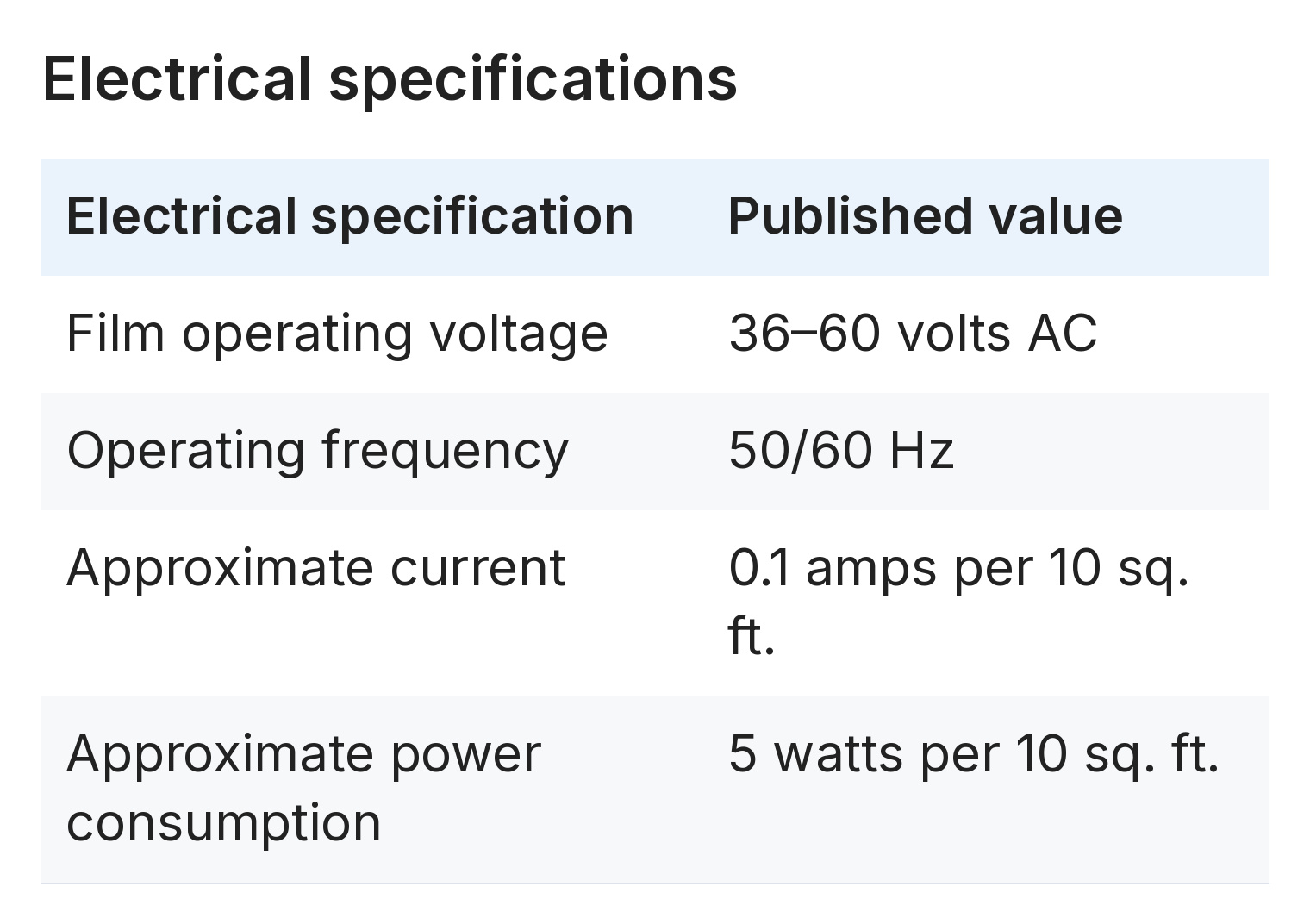
Always follow the specifications supplied with your order, as requirements vary by product.
Choosing the Right Transformer
Transformer capacity depends on the connected glass area, product requirements, and whether panels will operate together or separately.
The transformer’s wattage rating describes its capacity, not its constant electricity consumption. A 100-watt transformer does not necessarily draw 100 watts whenever it is switched on.
Smart Glass Country offers 50-, 100-, and 200-watt transformers. Your supplier should confirm the correct model and permitted load for your installation.
Wiring should be completed by a qualified electrician.
For projects requiring adjustable frost levels or independent privacy zones, explore our guide to dimmable smart glass transformers and controls.
See how smart glass connects to its power supply:
How Should You Manage Daily Operation?
Schedule Regular Off Periods
Smart Glass Country’s published warranty states that smart glass must not remain continuously ON for more than 72 hours, because this may damage the switchable interlayer.
An overnight timer makes regular off periods easier to manage. Follow the operating schedule and minimum off-time specified for your particular product.
Choose Controls That Fit Your Routine
Smart glass can be operated through wall switches, remote controls, smartphone controls, and compatible automation systems.
For an office, a schedule can switch the glass off after working hours. At home, a wall switch or remote may provide all the control you need. Confirm compatibility when planning the installation.
Explore the ways you can control smart glass:
What Should You Budget for Running Smart Glass?
For 100 square feet of standard PDLC smart glass, budget for approximately 50 watts while clear.
Used for 10 hours a day, that equals approximately 15 kWh per month, or $2.10–$4.20 at the electricity rates illustrated above, before transformer and controller consumption.
To estimate your own running cost, start with the product’s power specification, your expected operating hours, and the rate on your electricity bill.
Planning a smart glass or smart film project? Contact Smart Glass Country for help choosing the product, power supply, and controls for your space.


Subscribe to Our Newsletter
Never miss an update. Get all the latest news delivered directly to your inbox.
