
Smart Glass Products
Make ordinary glass extraordinary

Smart Glass
Smart Film
Smart Glass Doors
Dyed Black Film and Glass
Smart Glass Spaces
Buy Samples
Online Calculator
Smart Glass Applications
Discover how smart glass is being used to for privacy, security and smart design.

Smart Glass Information
We love sharing our industry knowledge, ideas and design tips!

Blog
FAQs
Warranty
Projects
Installation Guide
PRICE
Partner with Us


Smart Film for Front Doors and Sidelights: Privacy Without Blinds
Love your glass front door but wish it offered more privacy? Discover how smart film transforms doors and sidelights from clear to frosted, keeps daylight flowing, and complements your home entrance design. Explore the best options, controls, and installation tips.
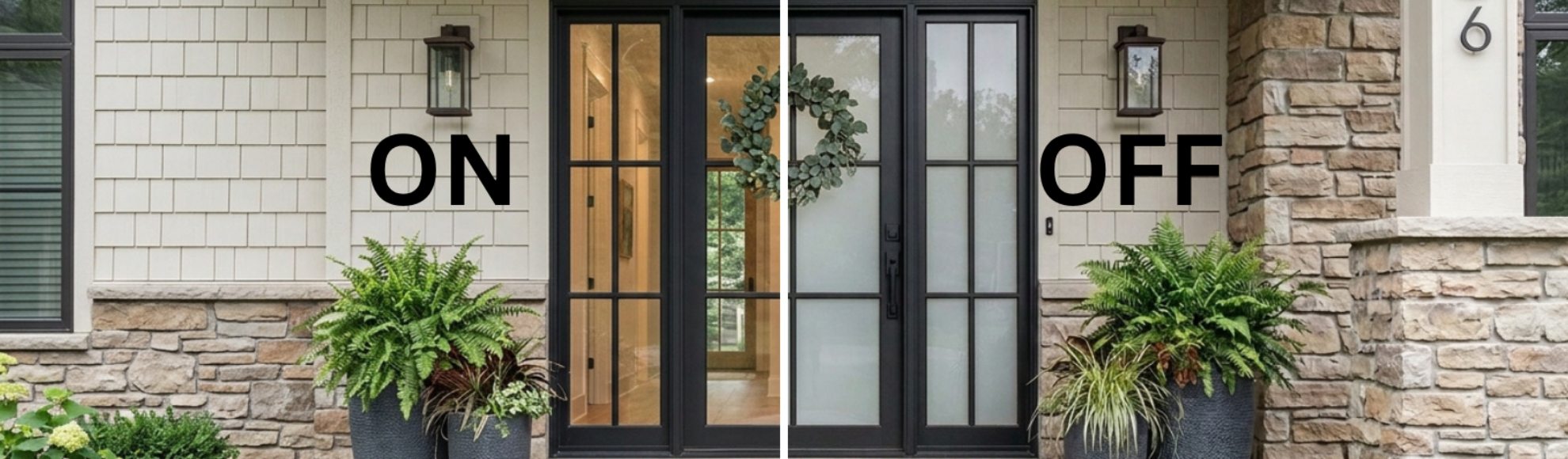
Your glass front door brings in daylight. It can also give anyone on your doorstep a view into your home.
Sidelights—the narrow windows beside an entrance door—can expose hallways, living spaces, and everyday activity inside. Covering them solves the privacy problem, but it changes the entrance you chose for its light and openness.
Smart film for existing glass gives front doors and sidelights switchable privacy. Applied to compatible glass, it changes from transparent to frosted with an electrical control. Keep an open view when you want it and obscure the view inside when you need home privacy.
For homeowners looking for glass door privacy without blinds, it offers a practical way to preserve the entrance’s architectural lines. Watch the video below to see smart film installed on sidelights in this Texas residence.
Explore Smart Film for Your Entrance →
How Does Smart Film Work?
Smart film, also called smart tint or electric window tint, uses polymer dispersed liquid crystal (PDLC) technology.
Standard PDLC film operates in two states:
- Power on: The liquid crystals align, making the film transparent.
- Power off: The crystals scatter light, creating a frosted appearance that obscures views through the glass.
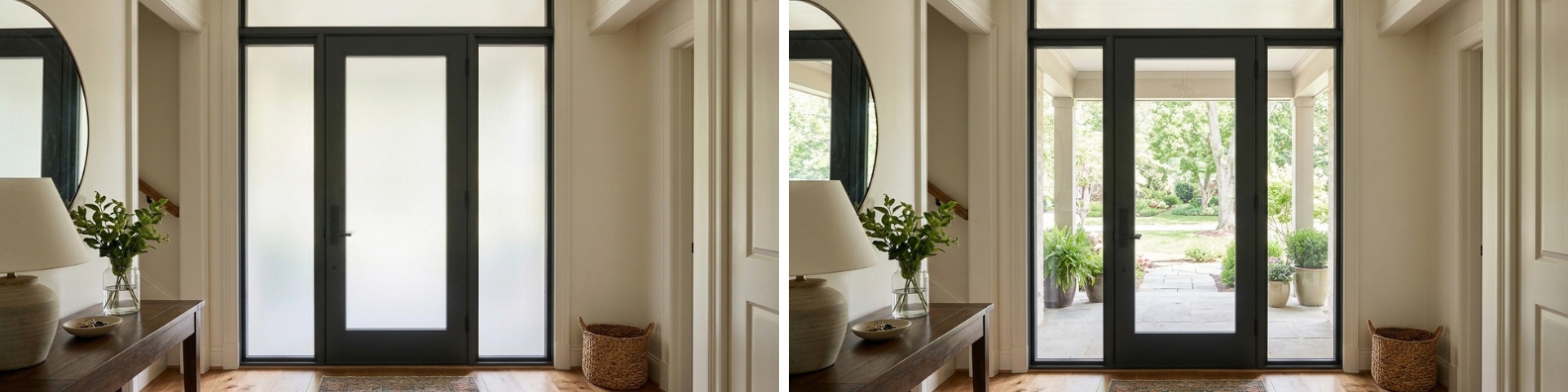
The frosted state continues to admit diffused daylight, helping your foyer feel bright while limiting views inside. Smart film provides privacy rather than blackout, and its transparent state can retain some haze.
Why Choose Smart Film for Front Doors and Sidelights?
Control Privacy Without Covering the Entrance
A sidelight may be narrow, but it can create a direct sightline into your home. The same applies to a full-height glass door or a glazed panel beside the handle.
Switchable privacy lets you decide when those views are open. Keep the glass transparent to enjoy the outlook, then switch it to frosted when you want a more private entrance.
Upgrade Existing Glass
If you like your front door, replacing it solely for privacy may be unnecessary.
Retrofitting existing glass with privacy window film can add switchable privacy while retaining suitable doors and sidelights.
Before ordering, have the glass surface, frame, electrical route, and exposure reviewed. The installation needs to suit your particular entrance.

Preserve Your Home Entrance Design
Curtains and blinds add another visible element to an entrance. Smart film keeps privacy control at the glass surface, helping the door, frame, and surrounding finishes remain the focus.
Whether your home entrance design features a single glass door, matching sidelights, or a glazed transom, planning the wiring early helps maintain a cohesive finished appearance.
Explore more smart glass and smart film ideas for homes.
Choose Convenient Controls
Smart film can be operated using wall switches, remotes, smartphones, timers, and compatible home automation systems. The available functions depend on the controller and integration selected.
For example, you may want a simple switch near the entrance or scheduled privacy as part of your evening routine. Discuss these preferences before installation so the controls match how you use your home.
Explore control options for switchable privacy glass and film:
Smart Film vs. Window Tint for Front Door Privacy
When searching for window tint for sidelights, homeowners often encounter products that solve different problems.
Solar window tint generally focuses on sunlight, glare, or heat control. Frosted film provides a fixed privacy finish. Smart film adds the ability to change the glass’s appearance electrically.
.jpg)
A key distinction is nighttime performance. Reflective film may provide daytime privacy but allow views inside when interior lighting is brighter than the outdoors.
Read our comparison of smart film vs. one-way privacy film for additional information on choosing a front door window treatment.
Explore Smart Film for Your Entrance →
Does Smart Film Provide Glass Door Privacy at Night?
In its frosted state, smart film obscures views through the glass without relying on the outdoors being brighter than your home.
Because it transmits diffused light, light sources or shadows may still be visible. Review a sample under the lighting and viewing conditions that matter for your entrance.
Our guide to smart glass privacy at night explains the difference between transparent and frosted operation after dark.
See how switchable privacy glass looks at night with interior lights on:
Can Smart Film Be Installed on an Exterior Front Door?
For an exterior-facing entrance, the important distinction is between the door’s location and the film’s exposure.
Surface-applied PDLC film is generally intended for indoor use. An exterior-facing door needs a project review to determine whether installation on the protected interior glass surface is appropriate.
Share photographs and details about direct sunlight, moisture, existing coatings, and glass construction before choosing the product. For exposed applications, smart privacy glass may be the more suitable option.
How Is Smart Film Wired on a Swinging Glass Door?
Fixed sidelights and moving door panels need different wiring arrangements. A swinging door requires a connection designed to accommodate repeated movement.
Options may include:
- Power transfer loops: Protected cables carry power between the frame and moving door.
- Power transfer hinges: Wiring passes through a compatible hinge.
- Magnetic connectors: Contacts transfer power when the door reaches the connected position.
- Cable channels and concealed routing: These help organize wiring along the glass or frame.
With magnetic contacts, power is available only while the contacts are connected. That affects when standard PDLC film can remain transparent.
See our guide to wiring smart film and smart glass on doors for examples of connections and cable management.
Explore wiring options for moving glass doors and ways to conceal electrical connections:
Smart Film or Smart Glass: Which Fits Your Entrance?

A Welcoming Entrance. Privacy on Your Terms.
Your glass front door and sidelights can bring daylight into your home without leaving it constantly on display. Smart film adds the flexibility to enjoy an open view or switch to frosted privacy, while preserving the clean lines of your entrance.
The right solution starts with your glass, door movement, and wiring—not just the dimensions. Reviewing these details before ordering helps ensure the product and controls suit your home.
Ready to add privacy to your front door or sidelights? Send Smart Glass Country photos of your entrance, approximate glass measurements, and your preferred controls. Our team can review your setup, discuss suitable options, and help you plan your project.
Explore Smart Film for Your Entrance →


Subscribe to Our Newsletter
Never miss an update. Get all the latest news delivered directly to your inbox.
