
Smart Glass Products
Make ordinary glass extraordinary

Smart Glass
Smart Film
Smart Glass Doors
Dyed Black Film and Glass
Smart Glass Spaces
Buy Samples
Online Calculator
Smart Glass Applications
Discover how smart glass is being used to for privacy, security and smart design.

Smart Glass Information
We love sharing our industry knowledge, ideas and design tips!

Blog
FAQs
Warranty
Projects
Installation Guide
PRICE
Partner with Us


Why Is Black Smart Glass More Expensive Than Standard Smart Glass?
Why does black smart glass cost more than standard white smart glass? Discover how specialized tinting, premium materials and complex manufacturing affect pricing—and which switchable privacy solution best fits your project.
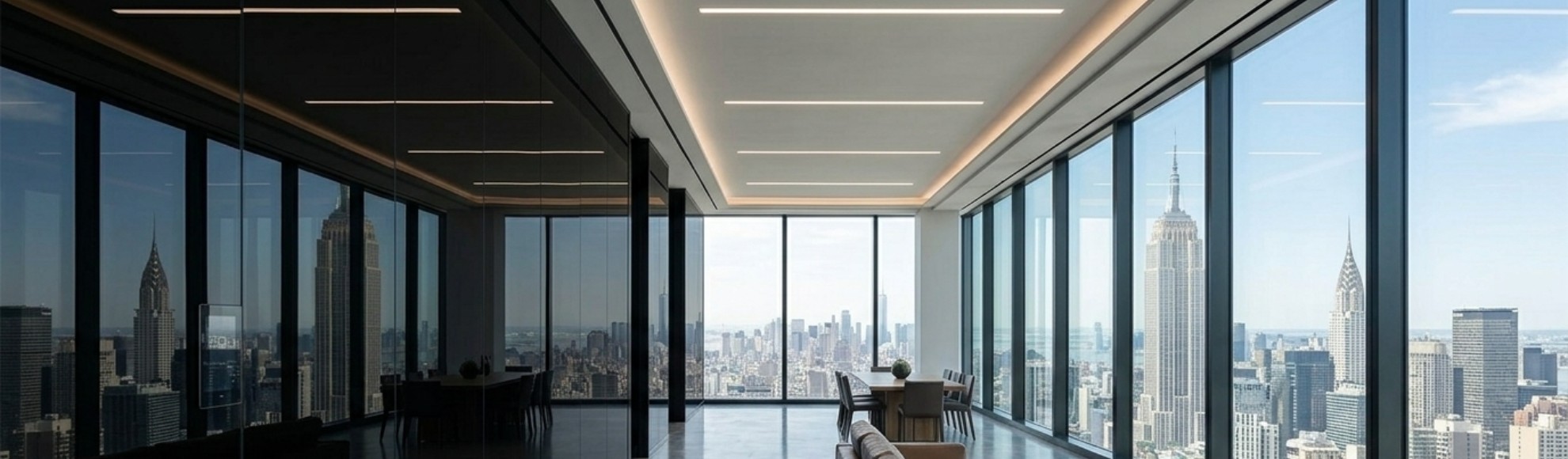
Black smart glass offers something standard switchable privacy glass cannot: a bold, dark appearance that makes a strong architectural statement. But that distinctive look also comes at a higher price.
Why? Because black smart glass and black smart film require additional materials, more specialized manufacturing and stricter quality control than standard white PDLC products.
While standard smart glass naturally switches between frosted white and transparent, dyed black versions combine switchable privacy technology with specialized tinting layers. The result is a premium product that typically appears dark or black when switched off and transparent with a dark tint when switched on.
Here is what drives the price difference—and how to determine whether black or standard smart glass is the better fit for your project.
What Is the Difference Between Black Smart Glass and Standard Smart Glass?
Both products use switchable privacy technology, but their appearance and construction differ.
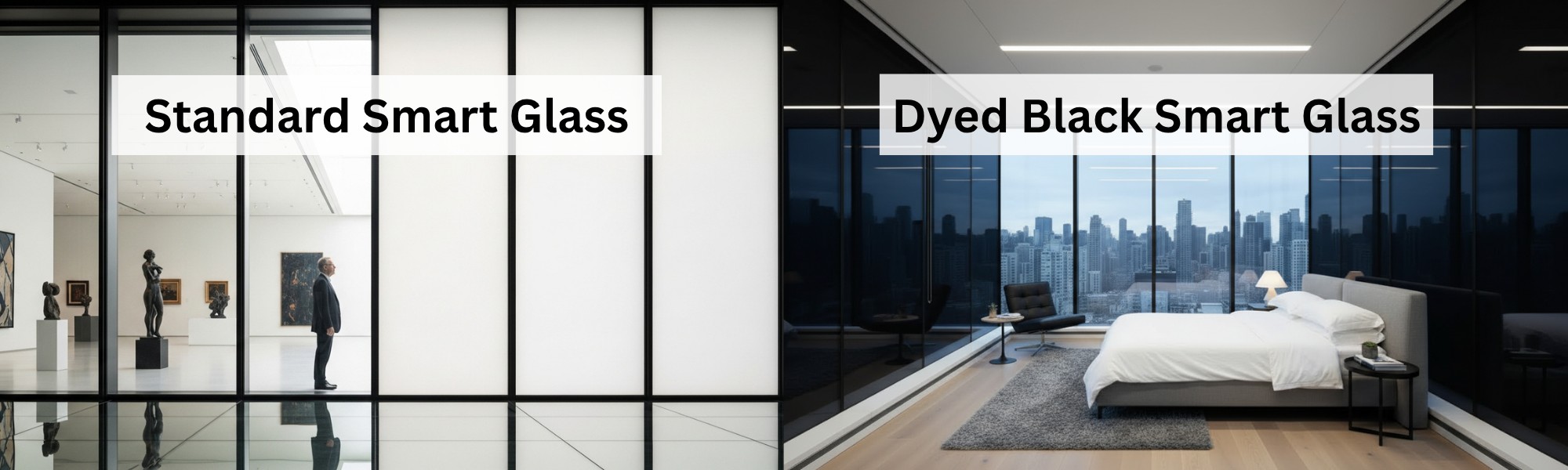
Standard smart glass and smart film use polymer dispersed liquid crystal technology, commonly known as PDLC. When electricity is applied, the liquid crystals align, allowing the glass or film to become transparent. When the power is switched off, the crystals scatter light, creating a frosted white appearance.
Dyed black smart glass and smart film incorporate additional tinting materials to create a darker appearance. When switched off, the product appears dark or black. When switched on, it becomes transparent but retains a dark tint.
The most important distinction is that dyed black smart glass does not switch from black to completely clear. It switches from a dark opaque appearance to a dark transparent appearance.
Why Does Black Smart Glass Cost More?
1. Black Smart Glass Requires Additional Manufacturing Layers
Standard PDLC smart film is built around a liquid crystal layer positioned between conductive layers.
Black smart film requires that switchable technology to be combined with additional materials that produce its darker appearance. Depending on the product construction, these can include specialized dye layers or carbon- or ceramic-based tinting materials.
Integrating those materials adds complexity to the manufacturing process. More layers generally mean additional materials, more production steps and more opportunities for defects.
For smart glass, these specialized layers must also be incorporated into the finished glass assembly, further contributing to the price difference.
2. Premium Tinting Materials Increase Material Costs
Achieving a dark appearance without significantly compromising visual quality requires more than simply applying an inexpensive black tint.
Manufacturers may use specialized dyes, carbon-based materials, ceramic additives and UV-stabilizing components to maintain a consistent appearance and support long-term durability.
Lower-quality dyes can be more vulnerable to fading or uneven coloration over time. Higher-quality materials help address these concerns, but they also increase production costs.
Put simply: the darker look is not just a color upgrade. It involves a more specialized combination of optical materials.
3. Darker Products Require Greater Attention to Heat
Dark surfaces absorb more solar energy than lighter surfaces. That makes heat management an important consideration for black smart glass and black smart film, particularly in applications exposed to substantial sunlight.
Excess heat can affect the performance and longevity of switchable film, so darker products may require additional engineering or more careful installation planning.
The suitability of any smart glass or film for a particular environment depends on its specific construction, exposure conditions and product specifications.
For buyers, that means a black product should be evaluated for both appearance and application—not selected based on color alone.
4. Dark Tint Makes Imperfections More Noticeable
When a tinted smart film is applied across a large glass surface, inconsistencies can become easier to spot.
Potential visual concerns include:
- Uneven coloration.
- Patchy tinting.
- Variations in opacity.
- Visible optical distortion.
- Iridescent or rainbow-like effects.
- Differences in appearance between adjacent panels.
Producing a consistent dark finish requires tighter manufacturing tolerances and more rigorous quality control.
Those extra quality-control requirements contribute to the higher cost of black smart glass and film, especially for larger projects where multiple panels need to match.
5. Black Smart Glass Is Produced in Lower Volumes
Standard white PDLC smart glass and smart film are widely used for offices, healthcare facilities, bathrooms, meeting rooms and interior partitions.
Because standard products are manufactured in larger quantities, suppliers benefit from more established production processes and economies of scale.
Dyed black smart glass serves a narrower market. It is more commonly specified for projects where a dark aesthetic is central to the design.
Lower production volumes generally mean higher manufacturing costs per unit. As a result, black smart glass and black smart film are positioned as specialty products rather than standard privacy solutions.
Is Black Smart Film More Expensive Than Standard Smart Film?
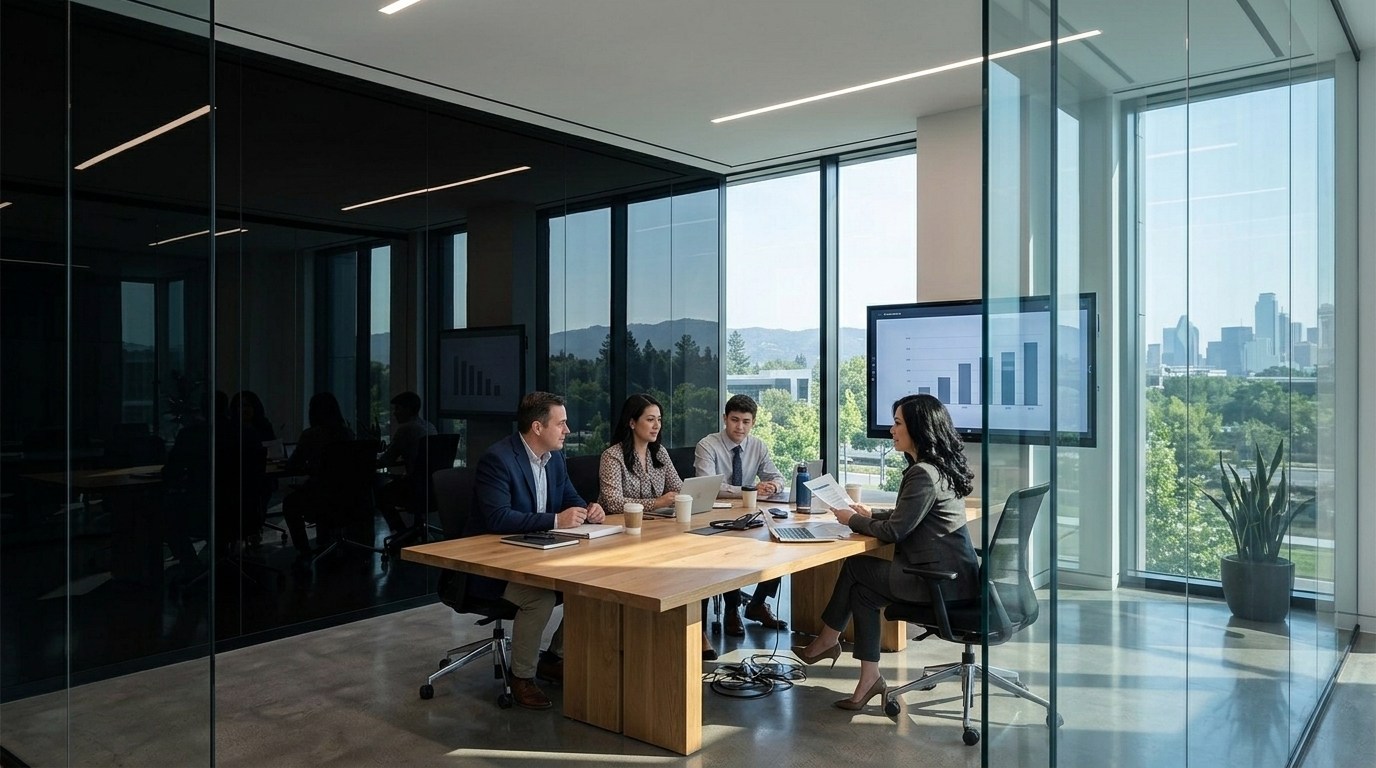
Yes. Dyed black smart film generally costs more than standard white smart film because it requires additional tinting materials, specialized manufacturing, tighter quality control and lower-volume production.
The final price can vary depending on:
- The dimensions of each glass panel.
- The total project size.
- Whether the film is being applied to existing glass.
- Product configuration and tint characteristics.
- Electrical requirements and control options.
- Installation complexity.
- Shipping, fabrication and project location.
If you are retrofitting existing glazing, standard smart film is generally the more economical option for adding switchable privacy.
Black smart film may be worth the additional investment when the dark appearance is essential to the overall design.
Is Black Smart Glass More Expensive Than Standard Smart Glass?
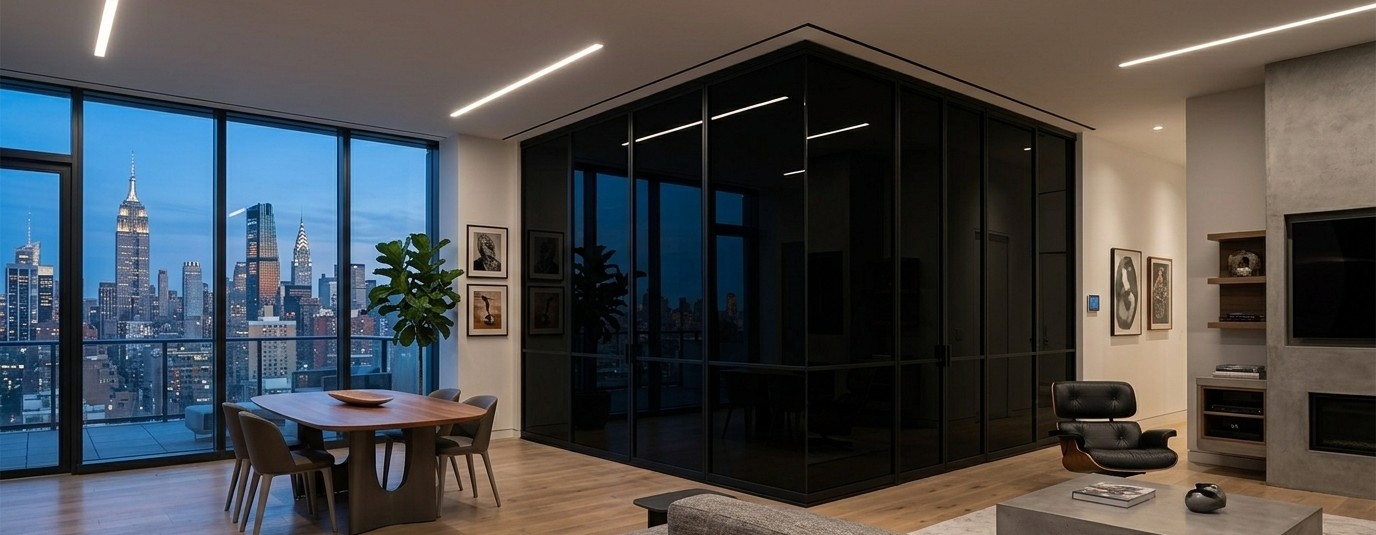
Yes. Black smart glass typically costs more than standard smart glass because it combines the cost of specialized switchable film with the fabrication requirements of a finished glass product.
Beyond the premium associated with the dyed black film itself, the total cost of smart glass can also depend on factors such as:
- Glass dimensions.
- Glass thickness.
- Required glass type.
- Laminated or insulated glass construction.
- Hardware and framing.
- Electrical integration.
- Installation conditions.
For projects that already have suitable glass in place, smart film may provide a more practical alternative to replacing the entire glass assembly.
For new construction or projects requiring new glazing, smart glass may be the more appropriate solution.
Does Black Smart Glass Turn Completely Clear?
No. Dyed black smart glass generally becomes transparent when switched on, but it retains a dark tint.
Think of the difference between looking through clear glass and looking through sunglasses. Both allow visibility, but the tinted version reduces brightness and changes the appearance of the view.
Standard smart glass is typically the better option when maximizing visible light and maintaining a lighter transparent appearance are priorities.
Black smart glass is better suited to projects where a dark aesthetic matters more than achieving the clearest possible on-state.
Is Black Smart Glass the Same as Blackout Glass?
Not necessarily.
A dark or black appearance does not automatically mean a product completely blocks all light.
Dyed black smart glass is primarily distinguished by its darker coloration and tinted transparent state. Its actual light transmission, privacy level and suitability for light-blocking applications depend on the specific product.
If your project requires complete darkness or tightly controlled lighting, do not assume that black smart glass will deliver full blackout performance.
Instead, confirm the relevant product specifications and discuss your requirements with a smart glass specialist.
This distinction is especially important for applications such as:
- Bedrooms.
- Media rooms.
- Photography studios.
- Medical spaces.
- Presentation rooms.
- Facilities requiring controlled lighting conditions.
When Is Black Smart Glass Worth the Higher Price?
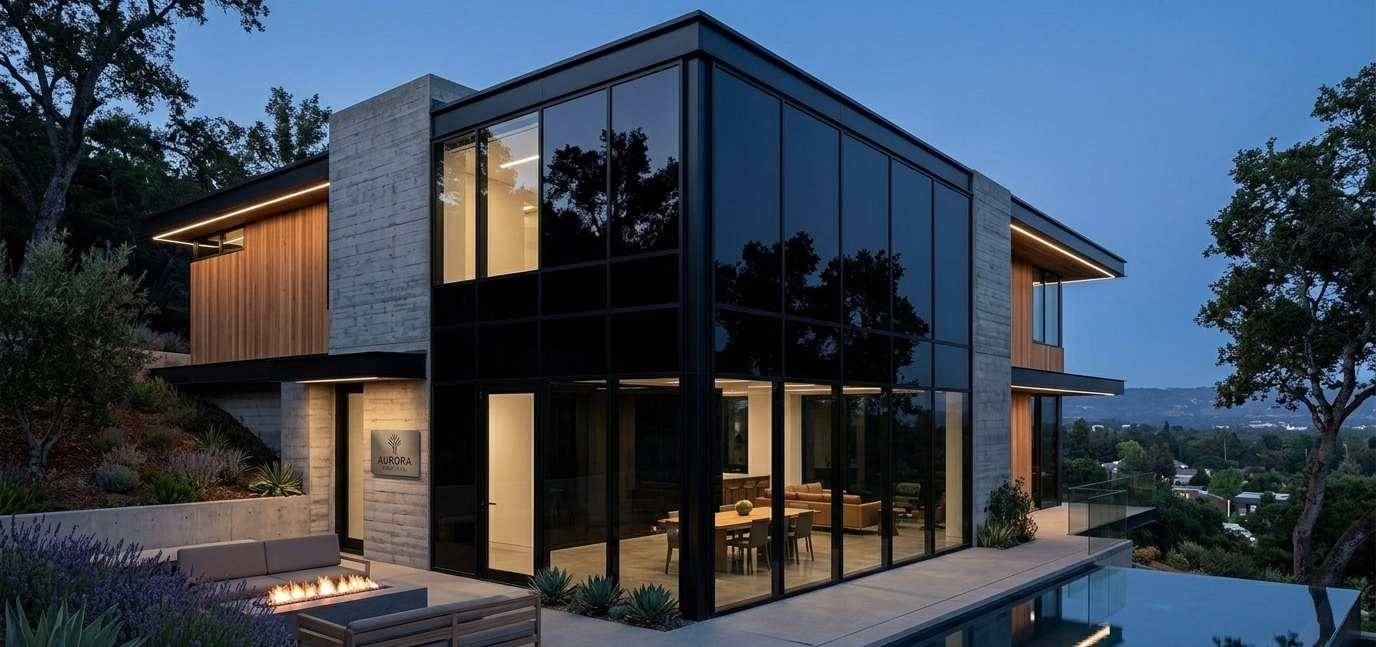
Black smart glass can make sense when the appearance of the glass is a major part of the project’s design.
It may be a strong fit for:
- High-end residential interiors.
- Luxury office environments.
- Premium conference rooms.
- Modern retail and hospitality spaces.
- Design-focused interior partitions.
- Projects where darker glazing complements the surrounding finishes.
- Applications where reduced brightness is desirable.
In these settings, the additional cost may be justified by the combination of switchable privacy and a distinctive tinted appearance.
However, black smart glass is not automatically a better product than standard smart glass. It simply offers a different visual result.
The right choice depends on whether your priorities are design impact, light transmission, budget or a balance of all three.
When Is Standard White Smart Glass the Better Choice?
Standard smart glass is often the better fit when you want dependable switchable privacy with a lighter appearance and a more accessible price point.
It is particularly well suited to:
- Office partitions.
- Conference rooms.
- Healthcare facilities.
- Dental offices.
- Bathrooms.
- Residential interior windows.
- Consultation rooms.
- Existing glass partitions requiring a privacy upgrade.
Because standard PDLC switches from frosted white to transparent, it helps preserve a brighter look when privacy is not required.
For many projects, it provides the most practical balance of privacy, flexibility and value.
Should You Choose Smart Glass or Smart Film?
The right product depends on whether you are working with existing glass or planning a new glass installation.
Smart film is generally used to retrofit suitable existing glass. It can be an effective option when you want switchable privacy without replacing the glazing.
Smart glass incorporates switchable technology into a finished glass product. It is often considered for new construction, renovations involving replacement glass and projects that require a complete glazing solution.
Both standard white and dyed black options can involve different project requirements, so the best choice depends on the specific application.
Frequently Asked Questions About Black Smart Glass Pricing
Why is black smart glass more expensive than white smart glass?
Black smart glass costs more because it requires specialized tinting materials, additional manufacturing layers, enhanced attention to heat and UV exposure, stricter quality control and lower-volume production.
Why is black smart film more expensive than standard smart film?
Black smart film combines switchable PDLC technology with additional dyed or tinted optical layers. Those materials and production requirements increase its cost compared with standard white PDLC film.
Does black smart glass become clear when switched on?
Black smart glass becomes transparent when switched on, but it generally retains a dark tint. It does not have the same light, clear appearance as standard smart glass.
Does black smart glass completely block light?
Not necessarily. A dark appearance does not automatically mean complete light blockage. Review the specific product’s performance characteristics if your project requires full blackout conditions.
Is black smart glass better than standard smart glass?
Neither option is universally better. Black smart glass offers a distinctive tinted appearance, while standard smart glass typically provides a brighter transparent state and a lower price.
Is standard smart film a more affordable privacy solution?
In many cases, yes. Standard smart film is typically less expensive than dyed black smart film and can often be applied to suitable existing glass, making it a practical option for privacy-focused renovations.
What affects the final cost of black smart glass or film?
Pricing depends on product dimensions, project size, glass or film configuration, fabrication requirements, installation complexity, electrical components and other project-specific factors.
Find the Right Smart Glass Solution for Your Project
Dyed black smart glass and smart film cost more because they offer a specialized combination of switchable privacy and dark-tinted design. The additional materials, manufacturing complexity and quality-control requirements all contribute to their premium price.
If your priority is a dramatic dark appearance, black smart glass or film may be worth the additional investment. If your priority is a brighter transparent state, practical privacy and a lower overall cost, standard smart glass or film may be the better choice.
Contact Smart Glass Country to discuss your project and compare the right smart glass or smart film options for your space.


Subscribe to Our Newsletter
Never miss an update. Get all the latest news delivered directly to your inbox.
