
Smart Glass Products
Make ordinary glass extraordinary

Smart Glass
Smart Film
Smart Glass Doors
Dyed Black Film and Glass
Smart Glass Spaces
Buy Samples
Online Calculator
Smart Glass Applications
Discover how smart glass is being used to for privacy, security and smart design.

Smart Glass Information
We love sharing our industry knowledge, ideas and design tips!

Blog
FAQs
Warranty
Projects
Installation Guide
PRICE
Partner with Us


Quiet on Demand: Smart Glass Study Pods for Modern Libraries
Modern libraries need flexible, distraction-free study spaces. Smart glass study pods provide on-demand visual privacy, support acoustic comfort, and preserve daylight—creating research-backed environments that improve focus, comfort, and productivity.
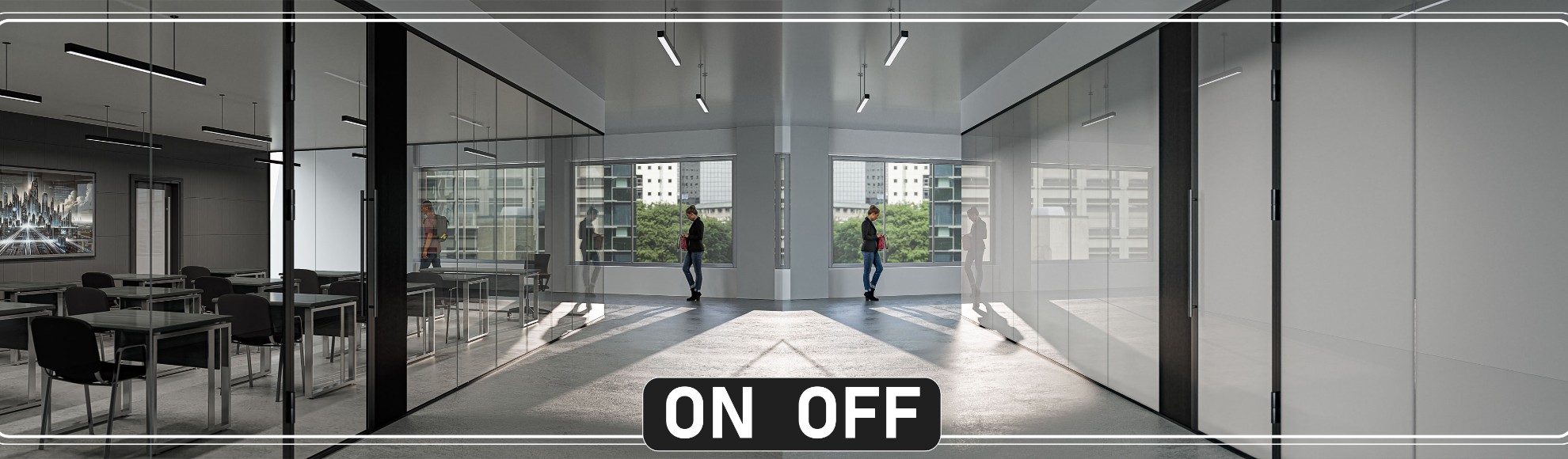
In a world of constant stimulation and digital noise, libraries remain one of the last sanctuaries of focus. Research shows that quiet, visually calm environments can improve attention and cognitive function—even brief restorative views of nature or calm spaces help sustain attention and reduce mental fatigue. 40-second green roof views sustain attention: micro-breaks and attention restoration (Journal of Environmental Psychology)
But even the quietest spaces need flexibility—and today’s students, researchers, and remote workers expect more from their study environments than ever before. That’s where smart glass comes in.
With switchable glass walls and Smart Film retrofits, libraries can create adaptable, sound-conscious study pods that provide visual privacy, enhanced acoustics, and a sleek, modern aesthetic—all at the push of a button.
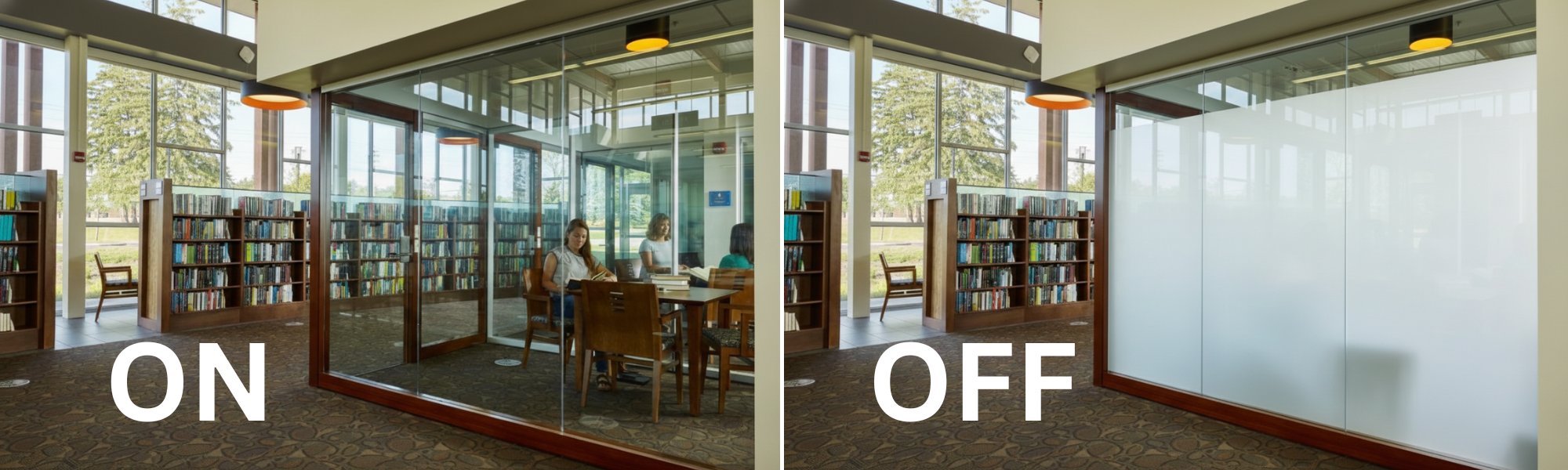
The Evolving Library: From Stacks to Study Zones
Modern libraries are no longer just repositories for books. They’ve evolved into dynamic learning hubs that support collaboration, individual study, digital media use, video conferencing, and remote work.
Studies on learning and work environments show that uncontrolled visual and auditory distractions can diminish performance and focus, particularly in open-plan settings where noise and movement are constant. (Wikipedia)
Smart glass study pods allow libraries to zone spaces effectively—creating areas that can be open and welcoming or private and focused depending on user needs.
Frosted for Focus: How It Works
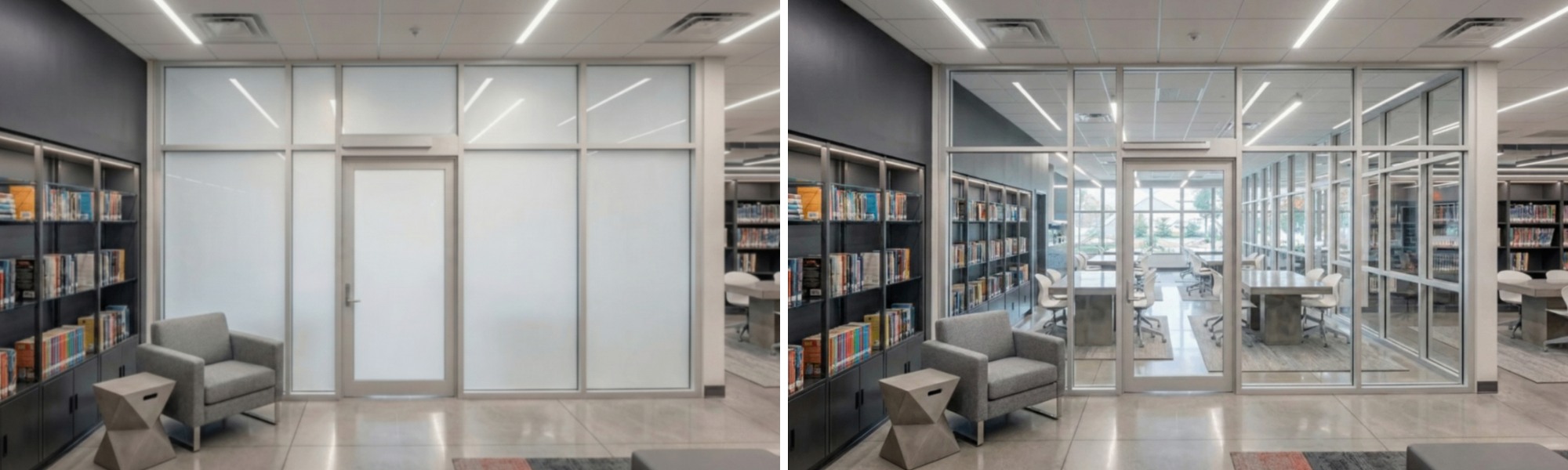
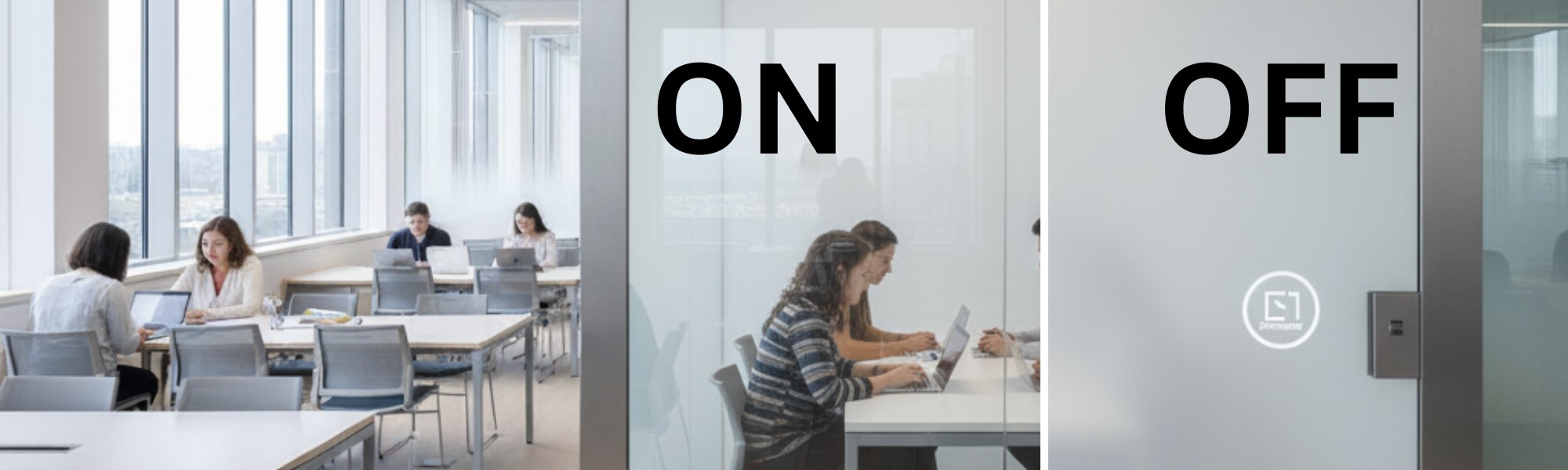
Smart glass uses PDLC (Polymer Dispersed Liquid Crystal) technology to change instantly from clear to frosted. This delivers a visual barrier that reduces distraction while maintaining access to daylight and interior transparency—an important element of occupant comfort and cognitive health.
Design research supports this approach: environments with visual connections to nature or controlled daylight exposure have been shown to enhance cognitive performance, mood, and task engagement. Design by nature: influence of windows and nature views on cognitive performance (ScienceDirect/ResearchGate)
- Clear Mode – Ideal for openness, natural light, and visual supervision
- Frosted Mode – Reduces visual noise and signals a zone of focused, individual study
Plus, existing glass partitions can be upgraded with Smart Glass Country’s Smart Film, making retrofit installation simple and cost-effective.
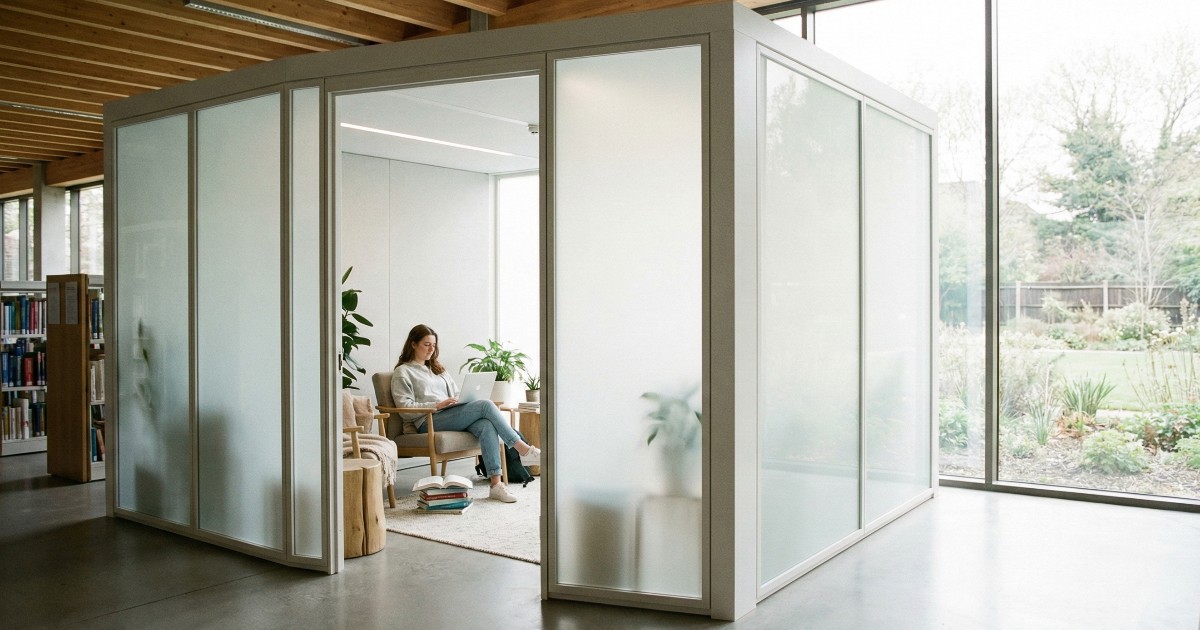
Acoustic Privacy: More Than Just a View
Smart glass is often thought of for visual privacy, but paired with sound-rated framing or laminated systems it also supports acoustic comfort—a key factor in retention and comprehension while studying.
Environmental psychology and workplace studies highlight that background speech and noise significantly disrupt performance and attention, especially in shared spaces. (Wikipedia)
Pairing smart glass pods with sound-dampening elements such as carpeted floors, acoustic panels, and thoughtful layout zoning supports quieter, more productive zones without sacrificing natural light.
Real-World Applications
University Libraries – Create individual or paired pods that can switch modes based on the time of day or student needs.
Public Libraries – Offer bookable study spaces for exam prep or remote work.
Co-Working & Learning Commons – Provide adaptable rooms for video calls, collaborative sessions, or deep focus work.
These pods are also inclusive. Curated environments that provide control over sensory input are particularly beneficial for neurodivergent users, as they help mitigate overwhelm and support focus. (wellness design consultants)
Why Libraries Are Choosing Smart Glass
✔️ Visual + Acoustic Privacy – Supports focus without full isolation
✔️ Space Efficiency – Flexible zoning in the same footprint
✔️ Modern Aesthetic – Clean, minimal design fits contemporary interiors
✔️ Low Maintenance – No blinds or curtains to manage
✔️ Daylight-Friendly – Maintains access to natural light even in frosted mode
And because Smart Glass SPACES can be controlled through wall switches, mobile apps, or building automation systems, it’s a solution designed for the digital age.
Quiet, Redefined
Silence alone is no longer the sole measure of a good study space. Adaptability, comfort, and control are equally important, and research supports environments that balance attentional demands with daylight, biophilic cues, and sensory choice.
Smart glass helps libraries do just that—creating spaces that feel calm, contemporary, and focused, while evidence-based design principles support better user outcomes.


Subscribe to Our Newsletter
Never miss an update. Get all the latest news delivered directly to your inbox.
